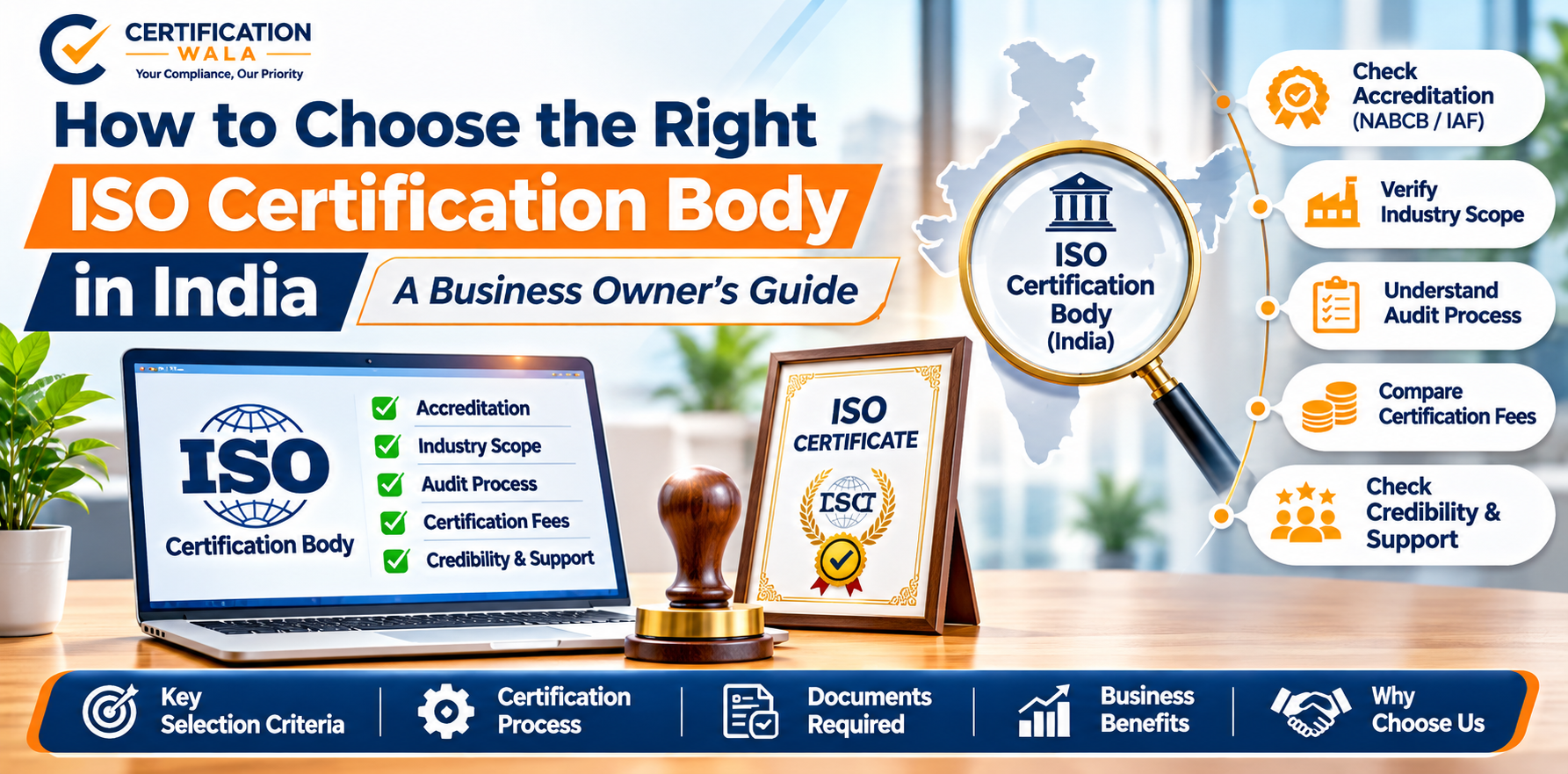
How to Choose the Right ISO Certification Body in India A Business Owners Guide
Introduction
Getting ISO certified is an important decision for businesses that want to improve their operations, build customer confidence and explore new business opportunities. However, selecting the right ISO certification body is just as important as choosing the correct ISO standard.
Many Indian business owners search for the best ISO certification body in India but struggle to understand which organisation is genuinely qualified to issue their certificate.
Some providers offer very low prices or promise certificates within a few days. But choosing a certification provider without checking its accreditation, industry scope and audit procedures can create problems later, particularly when customers or tender authorities verify your certificate.
So, how do you choose the right ISO certification body in India?
The best approach is to evaluate accreditation, technical competence, industry experience, audit transparency, certification fees and certificate verification facilities before making a decision.
This guide explains what business owners should check before selecting an ISO certification partner.
What Is an ISO Certification Body?
An ISO certification body is an independent organisation that evaluates whether a company's management system meets the requirements of a particular ISO standard.
For example:
-
ISO 9001 certification evaluates quality management systems.
-
ISO 14001 certification evaluates environmental management systems.
-
ISO 45001 certification evaluates occupational health and safety management systems.
-
ISO 27001 certification evaluates information security management systems.
-
ISO 22000 certification evaluates food safety management systems.
ISO itself does not issue certificates. Independent certification bodies conduct audits and make certification decisions.
An ISO consultant has a different role. Consultants help businesses understand requirements, prepare documentation and implement management systems. They do not automatically have the authority to issue accredited certificates.
Understanding this difference is the first step towards selecting the right certification provider.
7 Factors to Consider When Choosing an ISO Certification Body in India
1. Verify Accreditation
Accreditation should be one of your first checks.
In India, the National Accreditation Board for Certification Bodies (NABCB), under the Quality Council of India, provides accreditation for certification bodies within approved scopes.
Before selecting an ISO certification body, check:
-
Whether the organisation has valid accreditation.
-
Which accreditation body granted it.
-
Whether the accreditation covers your selected ISO standard.
-
Whether its accreditation is currently valid.
-
Whether the relevant industry sector is included.
Do not rely only on an accreditation logo displayed on a website. Verify the details through the official accreditation directory.
2. Check Industry-Specific Certification Scope
A certification body's approval may cover certain standards and industry sectors but not others.
For example, a food processing company planning ISO 22000 certification should check whether the certification body is authorised for the relevant food-chain category.
Similarly, a manufacturing company seeking ISO 9001 certification should verify the applicable industrial scope.
Choosing a certification body with the correct scope helps ensure that the audit is suitable for your business activities.
3. Understand the Audit Process
A genuine ISO certification process involves an independent assessment of the management system.
For most management system certification programmes, the process includes:
-
Application and scope review.
-
Audit planning.
-
Stage 1 audit, where applicable.
-
Stage 2 certification audit.
-
Review of corrective actions, if required.
-
Independent certification decision.
-
Certificate issuance.
Ask the certification body to explain how audits are conducted and what your organisation needs to prepare.
Be cautious of providers promising certificates without a proper audit.
4. Compare ISO Certification Fees
ISO certification fees differ according to the standard, company size, employee strength, locations and complexity of business activities.
A professional quotation should clearly explain:
-
Application charges.
-
Audit fees.
-
Certification charges.
-
Auditor travel expenses, where applicable.
-
Surveillance audit charges.
-
Additional assessment costs, if applicable.
For example, a small trading company and a manufacturing facility with multiple production units may have very different audit requirements.
Compare quotations based on the complete service and audit scope rather than choosing the lowest price.
5. Evaluate Experience and Auditor Competence
Industry knowledge is important because different businesses have different operational risks and management requirements.
A manufacturing unit, software company and food processing facility cannot be evaluated in exactly the same way.
Ask about:
-
Relevant industry experience.
-
Auditor qualifications and competence.
-
Certification body accreditation details.
-
Technical expertise in your selected standard.
-
Previous certification experience in similar sectors.
A professional certification body should be able to explain its audit methodology and demonstrate its competence.
6. Check Certificate Verification Facilities
Certificate verification is important when your customers, suppliers or government departments need to confirm your certification status.
Before selecting a certification body, ask how issued certificates can be independently verified.
Check whether the certificate includes:
-
Certified organisation's legal name.
-
Certificate identification number.
-
Applicable ISO standard and edition.
-
Certification scope.
-
Issuing certification body.
-
Accreditation information.
-
Issue and expiry dates.
-
Certification status.
You can also use recognised certificate verification platforms, including IAF CertSearch where applicable, and confirm details directly with the relevant accreditation body.
7. Look for Transparency and Professional Support
Certification is not a one-day activity. It involves planning, auditing, corrective actions and ongoing maintenance.
Choose an organisation that communicates clearly about:
-
Certification requirements.
-
Audit schedules.
-
Applicable fees.
-
Nonconformities and corrective actions.
-
Certificate validity.
-
Surveillance audits.
-
Complaints and appeals procedures.
Avoid providers that guarantee certification regardless of audit results.
Why Choose Certification Wala?
Selecting the right ISO standard and understanding the certification process can be challenging, particularly for startups, MSMEs and growing businesses.
Certification Wala helps Indian organisations understand their ISO requirements and navigate the certification journey with professional guidance.
Our support includes:
-
Guidance on selecting the appropriate ISO standard.
-
Assistance with management system documentation.
-
Gap analysis and implementation guidance.
-
Preparation for internal and external audits.
-
Guidance on certification body selection.
-
Support throughout the certification process.
Whether you operate a manufacturing company, IT firm, food business, construction organisation or service-based business, we help simplify the steps involved in preparing for ISO certification.
Our focus is on providing clear information, practical support and helping business owners make informed decisions.
Key Benefits of Choosing the Right ISO Certification Body
Selecting a competent and appropriately accredited certification body can offer several advantages.
1. Better Certificate Credibility: Appropriate accreditation and certification scope provide greater confidence in your certificate.
2. Improved Customer Trust: Customers and corporate buyers can verify relevant certification information.
3. Professional Audit Assessment: Competent auditors evaluate your management system against applicable requirements.
4. Business Opportunities: Recognised certification can support supplier registration and tender participation where specifically required.
5. Reduced Certification Risks: Checking accreditation and scope helps avoid unsuitable certification arrangements.
6. Long-Term Compliance: A structured certification relationship helps businesses plan surveillance audits and maintain their management systems.
Step-by-Step ISO Certification Process in India
Once you identify the right certification route, follow these general steps.
Step 1: Select the Appropriate ISO Standard
Choose a standard based on your business activities. For example, manufacturers may consider ISO 9001, while IT companies may require ISO 27001.
Step 2: Submit Business Information
Provide company registration details, employee strength, business address and operational activities.
Step 3: Documentation and Gap Analysis
Review existing processes and prepare the required management system documents.
Step 4: Implement the Management System
Introduce policies, procedures, responsibilities and employee awareness programmes.
Step 5: Conduct an Internal Audit
Review your management system to identify gaps and areas requiring improvement.
Step 6: Complete the External Certification Audit
The independent certification body conducts the required audit and evaluates compliance.
Step 7: Certification Decision and Issuance
After satisfactory audit results and closure of applicable nonconformities, the certification body makes its certification decision and issues the certificate.
Documents Required for ISO Certification
The required documents depend on the selected ISO standard and the nature of your business.
Commonly required documents include:
-
Company registration or incorporation certificate.
-
PAN details of the organisation.
-
GST registration certificate, where applicable.
-
Business address proof.
-
Organisation structure.
-
Employee details.
-
Products and services information.
-
Quality policy and objectives, where applicable.
-
Standard operating procedures.
-
Employee training and competency records.
-
Internal audit reports.
-
Management review records.
-
Risk assessment and compliance-related documents.
Additional records may be required for specialised standards such as ISO 27001, ISO 22000 and ISO 45001.
Frequently Asked Questions (FAQs)
1. How do I choose the best ISO certification body in India?
Check accreditation, industry scope, auditor competence, certification procedures, fee transparency and certificate verification facilities before selecting an ISO certification body.
2. What is the difference between an ISO consultant and a certification body?
An ISO consultant helps businesses prepare documentation and implement management systems. An independent certification body conducts the certification audit and makes the certification decision.
3. How can I verify whether an ISO certification body is accredited?
Check the official accreditation directory, such as NABCB, and verify the certification body's current accreditation status, applicable standard and approved industry scope.
4. Is NABCB accreditation important for ISO certification in India?
NABCB accreditation provides independent recognition of a certification body's competence within its approved scope. Businesses seeking international acceptance should also verify the relevant international recognition arrangement and accreditation scope.
5. Can I choose any ISO certification agency in India?
You can approach different certification service providers, but you should verify the organisation that will actually issue your certificate, its independence, accreditation status and approved certification scope.
Conclusion: Make the Right ISO Certification Decision
Choosing the right ISO certification body in India is about more than comparing prices or obtaining a certificate quickly. It is about ensuring that your management system is assessed by a competent, independent and appropriately accredited organisation.
Before making a decision, verify accreditation, industry scope, audit procedures, certification fees and certificate verification facilities.
At Certification Wala, we help businesses understand ISO certification requirements, prepare documentation and identify suitable certification routes.
Planning to obtain ISO certification for your business?
Contact our team for professional guidance and assistance throughout your certification journey.
Certification Wala
Website: https://certificationwala.com/
Email: info@certificationwala.com
Make an informed certification decision and take the next step towards building a credible, quality-focused business.