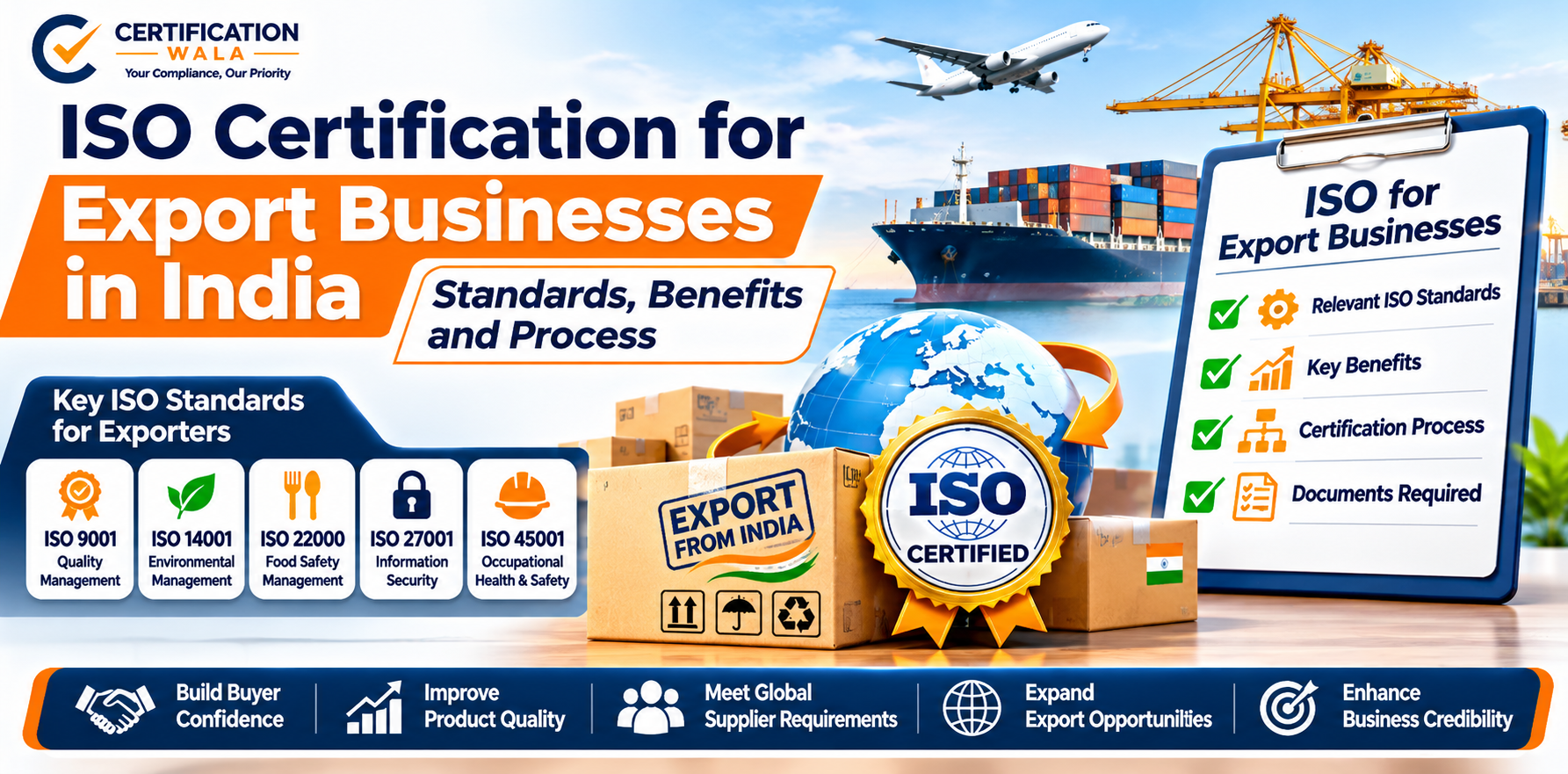
ISO Certification for Export Businesses in India Standards Benefits and Process
Introduction
India is one of the growing destinations for international sourcing across manufacturing, engineering, textiles, food processing, pharmaceuticals and information technology. As Indian companies enter international markets, overseas buyers increasingly expect reliable products, consistent quality and professional business operations.
For exporters, meeting these expectations is essential to building long-term relationships with international customers.
This is where ISO Certification for Export Businesses in India becomes important. It helps organisations establish structured management systems, improve operational consistency and demonstrate their commitment to internationally recognised standards.
For example, an Indian engineering manufacturer supplying automotive components to Germany may need a well-defined quality management system. Similarly, a food processing company exporting packaged products to the UAE may need effective food safety controls.
ISO certification does not automatically guarantee export approval or replace country-specific regulations. However, it can strengthen supplier credibility and help businesses meet customer and contractual requirements.
In this guide, we explain the relevant ISO standards, business benefits, certification process and documents required for Indian exporters.
Why Do Export Businesses Need ISO Certification?
International buyers do not evaluate suppliers only on product prices. They also consider production quality, delivery reliability, safety procedures, environmental responsibility and information security.
ISO management system standards help businesses establish documented procedures and monitor their performance.
Some common reasons exporters consider ISO certification include:
-
Meeting international customer expectations.
-
Improving product and service consistency.
-
Strengthening supplier qualification.
-
Supporting international vendor registration.
-
Improving production and operational efficiency.
-
Demonstrating commitment to quality management.
-
Building confidence among overseas customers.
For instance, an Indian garment manufacturer supplying European retailers may use ISO 9001 to establish consistent production checks, manage customer complaints and improve quality control.
Which ISO Standards Are Suitable for Export Businesses in India?
The appropriate ISO certification depends on your products, services, industry and international buyer requirements.
1. ISO 9001 – Quality Management System
ISO 9001 is one of the most widely adopted management system standards for export businesses.
It helps organisations maintain consistent processes, monitor product quality, improve customer satisfaction and manage operational activities.
Suitable for:
-
Engineering exporters.
-
Textile and garment manufacturers.
-
Automobile component suppliers.
-
Machinery manufacturers.
-
Electronics manufacturers.
-
Trading and service companies.
2. ISO 14001 – Environmental Management System
International buyers increasingly evaluate the environmental practices of their suppliers.
ISO 14001 helps businesses manage environmental responsibilities, waste, resource consumption and environmental risks.
It is particularly relevant for manufacturing companies, chemical industries, packaging businesses and industrial exporters.
3. ISO 22000 – Food Safety Management System
Food exporters must maintain effective food safety controls throughout their operations.
ISO 22000 helps organisations identify food safety hazards, control risks and establish systematic food safety management practices.
Suitable for:
-
Processed food manufacturers.
-
Food packaging companies.
-
Food processing units.
-
Agricultural product exporters.
-
Food storage and handling businesses.
ISO 22000 complements applicable FSSAI and importing-country requirements but does not replace mandatory food licences or product approvals.
4. ISO 27001 – Information Security Management System
Export companies handling international customer data, confidential designs, financial information and digital transactions need effective information security controls.
ISO/IEC 27001 helps organisations protect information and manage security risks.
It is especially relevant for IT exporters, software development companies, BPOs and outsourcing service providers.
5. ISO 45001 – Occupational Health and Safety Management System
ISO 45001 helps businesses identify workplace hazards, manage occupational health and safety risks and improve employee protection.
It is useful for engineering exporters, industrial manufacturers, construction material suppliers and companies operating production facilities.
Why Choose Certification Wala?
Selecting the appropriate ISO standard and understanding international certification requirements can be challenging, especially for MSMEs and businesses entering new export markets.
Certification Wala helps Indian businesses understand their ISO requirements and prepare for the certification journey.
Our professional support includes:
-
Guidance on selecting suitable ISO standards.
-
Assistance with management system documentation.
-
Gap analysis and implementation guidance.
-
Preparation for internal and external audits.
-
Guidance on certification body selection.
-
Support throughout the certification process.
-
Assistance in understanding certification maintenance requirements.
Whether you operate a small export business, manufacturing unit, food processing company or IT organisation, our team can help simplify the certification process.
Our focus is on practical guidance, transparent information and helping businesses select certification solutions according to their operational requirements.
Key Benefits of ISO Certification for Export Businesses
ISO certification can provide several advantages when the management system is properly implemented.
1. Builds International Buyer Confidence
Overseas customers often prefer suppliers that can demonstrate structured quality and management practices.
Relevant ISO certification can strengthen your business profile during international supplier evaluations.
2. Improves Product and Service Quality
ISO management systems encourage businesses to monitor production, inspect finished products and address quality problems systematically.
This helps exporters maintain more consistent product and service standards.
3. Supports International Supplier Registration
Some multinational companies and overseas buyers include ISO certification in their supplier qualification requirements.
Having the relevant certificate can help businesses meet these conditions where applicable.
4. Improves Operational Efficiency
Documented procedures, employee responsibilities and performance monitoring help organisations identify process gaps and reduce avoidable operational costs.
5. Strengthens Business Risk Management
Standards such as ISO 14001, ISO 45001 and ISO 27001 help organisations identify and manage environmental, workplace and information security risks.
6. Creates Better Export Opportunities
Appropriate certification can strengthen your business credentials when approaching international distributors, importers, manufacturers and corporate buyers.
However, certification alone does not guarantee export orders. Product quality, pricing, delivery performance and regulatory compliance remain equally important.
Step-by-Step ISO Certification Process for Export Businesses
The ISO certification process generally involves the following stages.
Step 1: Identify the Right ISO Standard
Understand your business activities and international buyer requirements. For example, a food exporter may consider ISO 22000, while an engineering manufacturer may require ISO 9001.
Step 2: Submit Business Information
Provide company registration details, employee strength, business locations and product or service information.
Step 3: Conduct Gap Analysis
Review existing business processes and identify improvements required to meet the selected ISO standard.
Step 4: Prepare Required Documentation
Develop applicable policies, procedures, work instructions, objectives and management system records.
Step 5: Implement the Management System
Introduce the required procedures, assign responsibilities and train employees.
Step 6: Conduct an Internal Audit
Evaluate the implemented management system, identify nonconformities and take corrective action.
Step 7: Complete the External Certification Audit
An independent certification body conducts the required assessment, generally involving Stage 1 and Stage 2 audits.
Step 8: Certification Decision and Issuance
After satisfactory audit results and closure of applicable nonconformities, the certification body makes its certification decision and issues the certificate.
Documents Required for ISO Certification for Export Businesses
The required documentation depends on the selected ISO standard and the nature of export operations.
Commonly required documents include:
-
Company incorporation or registration certificate.
-
PAN details of the organisation.
-
GST registration certificate, where applicable.
-
Import Export Code (IEC), where applicable.
-
Business address proof.
-
Organisation structure and employee details.
-
Product and service information.
-
Manufacturing or operational process details.
-
Quality policy and objectives, where applicable.
-
Standard operating procedures.
-
Inspection and quality control records.
-
Employee training records.
-
Internal audit reports.
-
Management review records.
-
Risk assessment and compliance records.
Additional documentation may be required for specialised standards such as ISO 22000, ISO 27001 and ISO 45001.
Remember that ISO documentation is different from statutory export documentation. Export transactions may separately require commercial invoices, packing lists, shipping bills, certificates of origin and product-specific approvals, depending on the shipment.
Frequently Asked Questions (FAQs)
1. Is ISO certification mandatory for export businesses in India?
No. ISO certification is generally not mandatory for every Indian exporter. However, overseas buyers, supplier agreements, government tenders or specific contractual requirements may make particular ISO certifications necessary.
2. Which ISO certification is best for export companies?
ISO 9001 is a common choice for exporters because it focuses on quality management. Food exporters may consider ISO 22000, IT exporters ISO 27001 and environmentally sensitive manufacturers ISO 14001.
3. Does ISO certification help Indian exporters get international orders?
ISO certification can improve supplier credibility and help businesses meet buyer qualification requirements. However, it does not guarantee export orders or replace product approvals and importing-country regulations.
4. What documents are required for ISO certification for exporters?
Common documents include company registration, PAN, GST details where applicable, IEC where applicable, business address proof, employee information, process details, management system policies and quality records.
5. How long does ISO certification take for an export business?
The timeline depends on business size, selected ISO standard, documentation readiness, implementation and audit scheduling. A straightforward small-business project may take a few weeks, while complex operations may require longer.
Conclusion: Strengthen Your Export Business with ISO Certification
International buyers expect suppliers to maintain consistent quality, reliable processes and effective management systems. For Indian exporters, adopting the right ISO standard can help build customer confidence and improve readiness for international markets.
Whether you need ISO 9001, ISO 14001, ISO 22000, ISO 27001 or ISO 45001, choosing the appropriate certification is an important step towards strengthening your export operations.
At Certification Wala, we help businesses understand ISO requirements, prepare documentation and navigate the certification process with professional guidance.
Planning to expand your export business internationally?
Contact our team today to understand which ISO certification is suitable for your organisation.
Certification Wala
Website: https://certificationwala.com/
Email: info@certificationwala.com
Build stronger business credibility, improve your management systems and prepare your organisation for international opportunities with the right ISO certification.