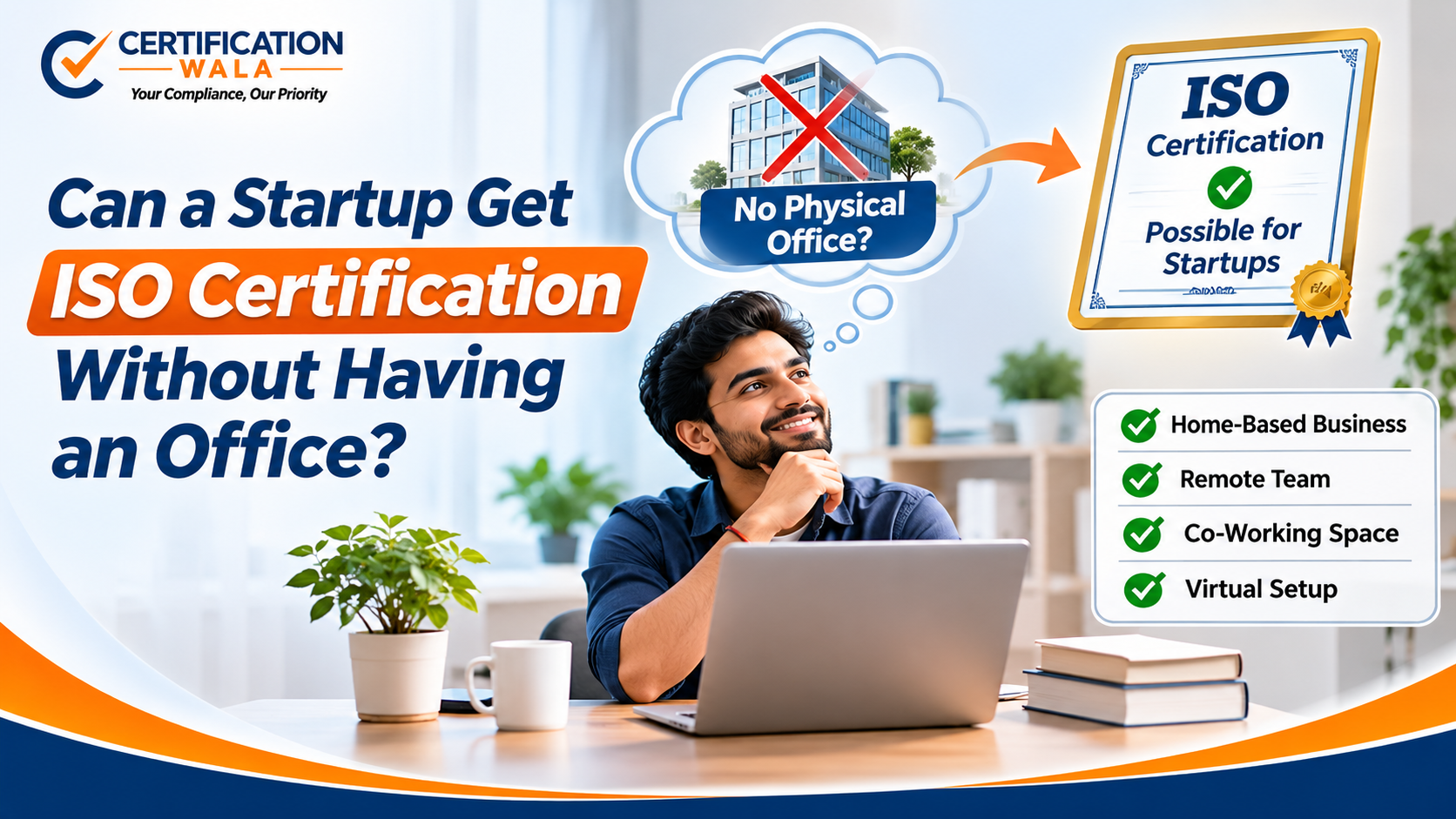
Can a Startup Get ISO Certification Without Having an Office
Starting a business in India has become easier than ever. Today, many entrepreneurs operate from home, work remotely, use coworking spaces or manage their teams online. However, when they plan to apply for ISO certification, one common question comes up: Can a startup get ISO certification without having a physical office?
The simple answer is Yes. A startup can obtain ISO certification without owning or renting a traditional office, provided it meets the applicable ISO standard requirements.
ISO certification is not exclusively for companies with large offices, commercial buildings or permanent infrastructure. It focuses on how a business operates, manages its processes, maintains quality and meets customer requirements.
For example, a software startup in Bengaluru may have employees working from different locations, while its founder manages operations from home. Similarly, a digital marketing agency in Delhi may operate remotely without a dedicated office. Both businesses can be eligible for ISO certification if they establish and implement the required management system.
At CertificationWala, we help startups, small businesses and growing organizations understand ISO requirements and choose suitable certification solutions according to their business activities.
Can a Startup Get ISO Certification Without Having an Office?
Yes, a startup can apply for ISO certification even if it does not have a registered commercial office.
However, there is an important difference between not having a traditional office and having no identifiable business operations.
An organization must establish its business activities, responsibilities, processes and operational controls. The certification audit must also be able to verify how the relevant management system is implemented.
A startup may operate from:
- A residential or home-based workspace.
- A coworking space or shared office.
- A fully remote working environment.
- A virtual business setup with distributed employees.
- A client's premises, where applicable to its business activities.
Important: The applicable ISO standard, certification scope and audit requirements determine what evidence and audit arrangements are necessary. A virtual address alone does not prove that a functioning business or management system exists.
Which ISO Certifications Are Suitable for Startups?
The right ISO standard depends on the nature of your business. A startup should select certification based on its services, products, customer expectations and operational risks.
Some commonly relevant standards include:
|
ISO Standard |
Suitable For |
|---|---|
|
ISO 9001 |
IT companies, consultants, service providers and manufacturers |
|
ISO 14001 |
Businesses managing environmental impacts |
|
ISO 27001 |
Software companies, IT startups and data-driven businesses |
|
ISO 45001 |
Organizations managing occupational health and safety |
|
ISO 22000 |
Food startups and food-related businesses |
For example, a software development startup handling customer information may consider ISO 27001, while a digital service provider looking to improve service quality may consider ISO 9001.
The best certification is not necessarily the one with the most popular name. It is the one that matches your actual business operations.
Key Benefits of ISO Certification for Startups
Getting ISO certification without having an office can offer several business advantages.
1. Builds Customer Trust
New businesses often struggle to establish credibility. ISO certification demonstrates that a startup follows a structured management system and takes quality seriously.
2. Helps Win Corporate Projects
Many established companies evaluate vendors before signing contracts. An appropriate ISO certification can strengthen a startup's profile during vendor registration and business tenders.
3. Improves Business Processes
ISO standards encourage businesses to define responsibilities, document important processes and monitor performance. This reduces confusion, especially when employees work remotely.
4. Supports Business Expansion
As a startup grows, its operations become more complex. A management system helps maintain consistency when adding employees, services or new business locations.
5. Strengthens Data and Information Management
For technology startups, ISO 27001 can help establish controls for information security, access management and handling sensitive business information.
6. Creates a Competitive Advantage
A startup with a relevant and valid ISO certificate may have an advantage when approaching larger clients, partners and business opportunities.
Step-by-Step ISO Certification Process for Startups Without an Office
The ISO certification process is generally similar for startups with and without physical offices. However, the audit arrangements and evidence may differ.
Typical certification journey
-
Step 1: Identify the Right ISO Standard
Understand your business activities and select the appropriate standard, such as ISO 9001 or ISO 27001.
-
Step 2: Define Your Business Scope
Clearly mention the services or activities covered by certification and explain how your remote or home-based operations function.
-
Step 3: Prepare Required Documents
Organize business registration details, policies, procedures, process records and other applicable documents.
-
Step 4: Implement the Management System
Put the required procedures into practice. Ensure employees understand their responsibilities and follow documented processes.
-
Step 5: Complete the Certification Audit
The certification body evaluates your management system. Depending on the scope and applicable audit rules, some activities may be assessed remotely and others may require an on-site visit.
-
Step 6: Close Audit Findings and Obtain Certification
Address any nonconformities identified during the audit. Certification is granted after the certification body completes its evaluation and makes a positive decision.
Remember: Remote auditing is not automatically available for every startup. The certification body determines whether remote assessment is suitable for the relevant activities and audit requirements.
ISO+2
Documents Required for ISO Certification Without an Office
A startup does not necessarily need office ownership documents to apply for ISO certification. However, it must provide appropriate evidence of its legal identity and business activities.
Commonly required documents include:
- Business registration certificate, such as Company Incorporation Certificate, LLP registration or applicable business registration.
- PAN card of the business, where applicable.
- GST registration certificate, if applicable.
- Business address and contact details.
- Details of founders, employees and responsible personnel.
- Description of products, services and business activities.
- ISO policy and applicable objectives.
- Process documents and operational records.
- Risk assessment and relevant compliance records.
- Internal audit and management review records, where required.
The exact document checklist depends on the selected ISO standard, business structure and certification scope.
For a home-based startup, the actual operating arrangement and address information should be explained honestly. Do not create a fictitious office address just to obtain certification.
Why Choose CertificationWala for Startup ISO Certification?
Choosing the right ISO certification guidance can make the process easier for a new business.
At CertificationWala, we assist startups, entrepreneurs, MSMEs and established organizations in understanding ISO certification requirements.
Our approach focuses on:
- Business-specific guidance: Recommendations based on your actual products and services.
- Standard selection: Help identifying the appropriate ISO certification.
- Documentation support: Guidance on preparing relevant management system documents.
- Certification process assistance: Support throughout the application and assessment journey.
- Transparent guidance: Clear information about applicable requirements, audit arrangements and certification.
Whether you operate from home, use a coworking space or manage a completely remote team, you can discuss your business requirements with our team before starting the certification process.
Frequently Asked Questions (FAQs)
1. Can a startup get ISO certification without having a physical office?
Yes. A startup can obtain ISO certification without owning or renting a commercial office. It must have identifiable business operations, a suitable management system and the necessary documentation to meet the applicable ISO standard.
2. Can I get ISO 9001 certification using my home address?
Yes. A home-based business can apply for ISO 9001 certification if its quality management system meets the standard's requirements. The business address and operational arrangements must be accurately disclosed.
3. Is GST registration mandatory for ISO certification?
GST registration is not a universal requirement for every ISO certification application. However, the organization must provide appropriate legal identity and business information. Additional requirements may depend on its business activities and applicable laws.
4. Can a remote company get ISO certification through an online audit?
Some audit activities can be conducted remotely using video meetings, electronic records and other information technologies. However, a fully online audit is not guaranteed. The certification body determines suitable audit methods based on the business scope and applicable requirements.
5. How much does ISO certification cost for a startup in India?
The cost depends on the selected ISO standard, business activities, employee strength, operational complexity and certification body. Startups should request a quotation based on their actual requirements rather than choosing a certificate based only on the lowest price.
Conclusion: Start Your ISO Certification Journey Without an Office
Having a physical office is not a universal requirement for obtaining ISO certification. Startups operating from home, coworking spaces or remote environments can also pursue certification if they establish an effective management system and meet the applicable audit requirements.
The important thing is to select the right ISO standard, maintain genuine business records and implement the required processes before applying.
If you are planning to get ISO certification for your startup without an office, CertificationWala can help you understand the requirements and identify the right certification approach for your business.
Get professional guidance and take the next step towards building a more credible and professionally managed startup.
Contact CertificationWala
- Website: www.certificationwala.com
- Email: info@certificationwala.com